

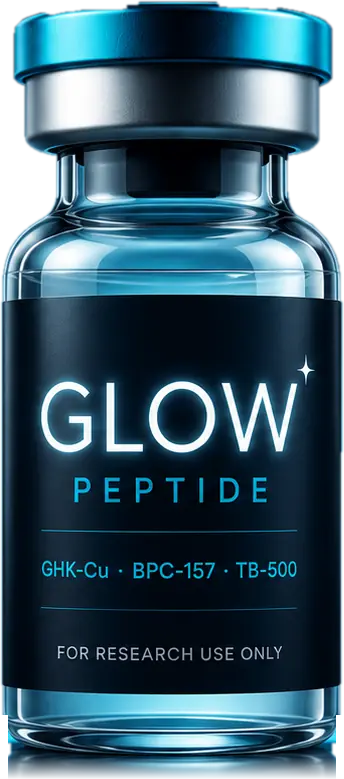
Quick Summary
The ‘Glow Peptide’ article provides in-depth information on a research peptide blend, made up of the 3 most studied repair and signaling peptides, GHK-Cu, BPC-157, and TB-500. Article explains what the blend is, reviews published information on individual components of the blend, how to select proper vendor to purchase original, non-adulterated product and at what price, and how to recognize degraded product. The GHK-Cu component is also the basis of our peptides for lash growth guide. For a wider view, see our guide to peptides for wrinkles.
The “the stack” has become one of the most-searched peptide terms of 2026, and for good reason. It is not a single molecule but a research blend combining three of the most-studied repair peptides: GHK-Cu, BPC-157, and TB-500. Below, we break down what the Glow Peptide actually is, what published research reports on each component of the blend, what to look for when sourcing it, and what to consider before purchasing. KLOW, the four-part version of this blend with KPV added, has its own klow peptide guide.
Important research disclaimer: The above article was intended for education and information purposes. None of the mentioned peptides are approved by the U.S. Food and Drug Administration for human therapeutic use. The two aforementioned peptides, BPC-157 and TB-500, are found on the FDA’s 503A bulks list, rendering them unsuitable for compounding.
Importantly, GHK-Cu is only approved as a cosmetic ingredient for topical use, in the form of creams, serums and ointments. When searching for a “it” be advised that it is intended for laboratory research only and is NOT for human consumption. Information in this article does NOT constitute medical advice, nor sets forth a dosing protocol for administration of any said compounds. Nor does it in any way support or endorse human use of said peptides. Consult with a Licensed Physician prior to investigation or use of said compounds for therapeutic purposes.
What Is the Glow Peptide?
Glow is not a peptide. It is a blend of three separate compounds in one vial: GHK-Cu, BPC-157 and TB-500. The name is a vendor label, not a chemical entity, which is why no regulator, database or scientific paper refers to a substance called Glow.
In other words, “the blend” is an industry nickname, not a pharmaceutical. Different vendors blend it at different ratios, with varying purity, and with varying degrees of third-party testing. That’s why understanding the three component peptides, and how to vet a supplier, matters more than the marketing label on the vial.
Each component has been studied independently in preclinical (animal and in-vitro) research:
- GHK-Cu is a naturally occurring tripeptide that binds copper and has been studied since the 1970s in the context of skin and connective-tissue research.
- BPC-157 is a synthetic peptide derived from a sequence found in human gastric juice, studied primarily in rodent models of soft-tissue and gastrointestinal repair.
- TB-500 is a synthetic peptide fragment based on Thymosin Beta-4, studied in animal models for actin regulation and cell migration research.
For a deeper dive into the GHK-Cu component specifically, including purity testing methodology and vendor scoring, see our GHK-Cu Peptide Purity & Vendor Scores breakdown.
What is in the Glow peptide stack?
The Glow stack is three peptides sold together: GHK-Cu, BPC-157 and TB-500. It is most commonly offered as 50 mg of GHK-Cu with 10 mg each of BPC-157 and TB-500, which is where the “GLOW 50” label on vendor listings comes from. It is a commercial bundle rather than a defined protocol, so the amounts differ between suppliers.
The glow peptide stack represents a strategic triad of bioregulatory molecules designed to investigate the limits of tissue repair and cellular signaling. While the term “glow” suggests an aesthetic outcome, researchers categorize this combination by its influence on the extracellular matrix and vascular integrity. This stack integrates GHK-Cu, BPC-157, and TB-500 to observe how synergistic pathways accelerate wound healing and modulate inflammatory responses. In 2026, the scientific community prioritizes understanding these mechanisms over the superficial descriptors often found in commercial wellness sectors. The primary research objectives focus on quantifying rates of collagen type I and III synthesis, evaluating the density of new microvessels, and measuring the downregulation of pro-inflammatory cytokines like IL-6. The GHK-Cu component of this stack is also the lead compound in our guide to peptides for hair growth. The BPC-157 and TB-500 half of that triad also anchors our guide to tendon repair peptides.
The Components: GHK-Cu, BPC-157, and TB-500
- GHK-Cu: This is a naturally occurring tripeptide that exhibits a high affinity for copper ions. Research into Copper peptide GHK-Cu demonstrates its ability to stimulate glycosaminoglycan synthesis and regulate metalloproteinases. It’s a fundamental agent for investigating dermal thickness and structural protein density.
- BPC-157: A 15-amino acid sequence derived from human gastric juice, this pentadecapeptide functions as a stable cytoprotective agent. It promotes the expression of Early Growth Response 1 (EGR-1) to trigger angiogenesis, making it a critical component for studies involving soft tissue recovery.
- TB-500 (Thymosin Beta-4 fragment): This synthetic peptide consists of the 17-amino acid sequence responsible for actin-sequestering. It facilitates the rapid migration of keratinocytes and fibroblasts to damaged sites; researchers use it to explore cellular motility and systemic tissue regeneration.
Research-Only Regulatory Landscape in 2026
As of 2026, the regulatory environment for peptide research remains stringent. The FDA and international bodies have tightened oversight on the distribution of these compounds, mandating that they remain designated for laboratory investigation only. Descriptive terms like GLOW are often viewed with skepticism by regulatory auditors because they conflate physiological data with prohibited therapeutic claims. Maintaining a strict research-only perspective ensures that the focus remains on biochemical pathways rather than unverified clinical applications. This distinction is vital for researchers who must navigate the legal boundaries of peptide procurement and experimental design. Compliance requires a commitment to data-driven observations, where the “glow” is measured by objective markers such as skin tensile strength or vascular endothelial growth factor (VEGF) expression levels. Investigating these compounds requires a precise understanding of their pharmacokinetics to ensure that laboratory protocols yield reproducible results.
What Does It Do? (What Research Reports)
There is no research on Glow itself. Every claim about it is assembled from studies of the three components separately, and no published work has tested the combination as a fixed-ratio product. What follows is what the literature says about each component, not about the blend.
The Glow Peptide blend consists of three different research-based peptides that have been shown in various studies to have certain effects. The list below describes what each of the three peptides “does” in strict research-literature-based summaries, NOT in terms of claimed human benefits for using this peptide.
GHK-Cu in the Literature
GHK-Cu is one of the most-published peptides in cosmetic and dermatological research, and studies on its effects have included:
- Modulating gene expression related to extracellular matrix proteins in cultured fibroblasts
- Copper-ion delivery in topical formulations studied for skin appearance
- In-vitro studies on collagen and elastin synthesis pathways
GHK-Cu is permitted by the FDA as a cosmetic ingredient (topical use only). It is not approved as an injectable drug.
BPC-157 in the Literature
BPC-157 has been studied almost exclusively in animal models, primarily rats. The published preclinical literature has examined its effects on:
- Tendon, ligament, and muscle fibroblast migration in vitro
- Gastric mucosa in rodent models
- Angiogenic markers in animal wound-healing studies
There are no large, completed, peer-reviewed human clinical trials establishing safety or efficacy for any indication. The FDA has classified BPC-157 as a substance that does not qualify for compounding under section 503A.
TB-500 in the Literature
TB-500 is a synthetic peptide fragment derived from Thymosin Beta-4. Published research has examined:
- Actin sequestration and cytoskeletal regulation in cell cultures
- Cell migration assays in laboratory settings
- Animal models of cardiac and dermal tissue research
Like BPC-157, TB-500 lacks completed human clinical trials and is not approved for therapeutic human use.
Lack of completion of human clinical trials for TB-500 means it has not been approved for therapeutic use on human beings.
We provide this strictly research-based summary of the stack’s possible actions for users who are primarily concerned with the nature of the ingredients of the peptides. (This summary is not a list of possible health benefits which may or may not be confirmed by human clinical trials.)
How Much Glow Peptide to Inject Per Day?
No dosing protocol for Glow exists, because the blend has never been studied in humans as a fixed-ratio formulation. Any figure circulating on forums is extrapolated from single-compound research, and extrapolating across three compounds at once compounds the uncertainty rather than averaging it out.
This is the most-searched practical question about the Glow Peptide, and we have to answer it carefully and honestly: there is no established, FDA-approved human dosing protocol for it, because the blend is not an approved drug and has never been studied as a fixed-ratio human formulation in a registered clinical trial.
What does exist is preclinical (animal-model) dosing data published in research papers for each individual component. Those numbers are typically reported in micrograms per kilogram in rodents, and they cannot be linearly extrapolated to a safe or appropriate human dose. Anyone publishing a “daily injection amount” for the Glow Peptide is either repeating bro-science from forums or making claims that are not supported by clinical evidence.
If you’re a researcher working with these compounds in a laboratory setting, dosing for in-vitro and animal work should come from the specific peer-reviewed paper you’re modeling your protocol on, not from a blog post, a vendor’s website, or a Reddit thread. If you’re a consumer, the only correct answer is: consult a licensed physician. Self-injection of unapproved research chemicals carries real risks including contamination, incorrect concentration, allergic reaction, and unknown long-term effects.
We will not publish a human injection schedule for GLOW, and you should be skeptical of any source that does without citing peer-reviewed clinical trials.
Glow Peptide: Where to Buy (And What to Look For)
Glow is sold only through research chemical suppliers labelling it for laboratory use, not for human consumption. It is not in pharmacies, is not a supplement, and no FDA-registered manufacturer stocks it. The only thing worth comparing between sellers is documentation, because the product itself is unregulated.
The stack is sold exclusively through research chemical suppliers that label their products “for laboratory research use only, not for human consumption.” It is not available in pharmacies, it is not legally sold as a supplement, and it is not stocked by FDA-registered drug manufacturers. Reputable vendors will clearly disclose this on their product pages.
When evaluating where to source a peptide for legitimate research purposes, the same purity-and-transparency criteria we apply to any peptide vendor apply here. Specifically, look for:
1. Third-party HPLC and mass spectrometry testing. A legitimate vendor publishes a Certificate of Analysis (CoA) for every batch, performed by an independent lab, not generated in-house. The CoA should list peptide identity (mass spec), purity percentage (HPLC), and ideally bacterial endotoxin testing for any product that will be reconstituted.
2. Disclosed blend ratios. Because “Glow Peptide” is not a standardized formulation, the ratio of GHK-Cu to BPC-157 to TB-500 varies between vendors. A reputable supplier discloses the exact mg-per-vial breakdown of each component, not just a total milligram count.
3. Pricing that matches the chemistry. TB-500 in particular is expensive to synthesize at high purity. A “glow” blend priced dramatically below the market average for high-purity TB-500 alone are a red flag. It usually means the blend is under-dosed, impure, or both. We’ve covered the same pattern in our NAD+ Peptide Purity & Pricing Deep Dive, where the cheapest option was almost never the highest-purity option.
4. Clean labeling and clear research-only disclaimers. Vendors who market peptides with implicit medical claims, before-and-after photos, or dosing protocols for human use are signaling that they’re either uninformed about FDA rules or willing to ignore them. Either way, that’s not the supplier you want.
5. Storage and shipping standards. Lyophilized peptides should ship cold or with insulation, and the vendor should publish reconstitution and storage guidance for laboratory handling.
For a worked example of how we score peptide vendors using these criteria, see our recent KPV Peptide Purity & Vendor Breakdown. The same scoring framework applies cleanly to the trios.
Peptide Insider does not currently endorse a specific the blend vendor. Because the blend is non-standardized and the regulatory status of the components is restrictive, we recommend researchers source the three component peptides individually from suppliers with verified third-party CoAs rather than purchasing a pre-made “Glow” blend of unknown ratio.
Vetting a Vendor: A Practical Checklist
For a blend, the vendor check is harder than for a single vial, and this is the point most buyers miss. A certificate covering a Glow vial gives one combined figure. It cannot tell you the purity of the GHK-Cu inside it, or whether the ratio on the label matches what is in the powder.
Because the Glow Peptide is a blend of three research compounds (GHK-Cu, BPC-157, TB-500) and is not regulated as a finished pharmaceutical, the entire burden of quality verification falls on the buyer. Before ordering from any supplier, work through the criteria below, if a vendor fails on the first two, walk away.
Third-Party Lab Testing and CoAs
A Certificate of Analysis (CoA) from an independent, accredited lab is the single most important document you will look at. It should list the batch number (matching your vial), confirm identity via Mass Spectrometry (MS) or HPLC, and report purity as a percentage, research-grade peptides should be 98% or higher. It should also include contaminant checks: heavy metals, microbial load, and residual solvents. A vendor that publishes CoAs prominently on each product page is showing its work. A vendor that only supplies one on request, or supplies a CoA dated years ago that doesn’t match your batch number, is not.
Website Transparency
Read past the marketing copy. A trustworthy vendor clearly identifies each component peptide with its chemical name and milligram quantity, describes synthesis and purification at a high level, and publishes shipping, storage, and return policies. Vague “high purity” or “pharmaceutical grade” language without lab data to back it up is a red flag. So is a GLOW product page that doesn’t disclose the ratio of the three component peptides in the blend.
Customer Support and Return Policy
Multiple contact channels (email, phone, chat), responsive technical support that can answer questions about purity and batch history, and a return policy that covers quality discrepancies are all signals of a vendor that stands behind its product. A vendor with no phone number and a one-line “all sales final” policy is telling you something about how they expect quality complaints to go.
Pricing: What You Should Actually Compare
Vial price is the wrong number. Two vials at $50 can hold very different amounts of active peptide. The comparable figure is cost per milligram, and for a blend you need the milligram split across the three components before that number means anything.
Vial price is the wrong number to compare across vendors. Two products priced at $50 can carry very different quantities of active peptide. Always calculate price per milligram: total vial cost divided by total milligrams of peptide. A 10 mg vial at $60 costs $6/mg; a 5 mg vial at $50 costs $10/mg, even though the second one looks cheaper on the shelf.
Factor in the hidden costs that inflate the final bill: shipping (especially temperature-controlled or expedited), reconstitution supplies if not included (bacteriostatic water, syringes), minimum order thresholds, and, for international vendors, customs duties. A product sold for 30% less that ships slow, warm, and without cold packs may cost you more in degraded potency than you saved on the invoice.
Storage, Shipping, and Spotting a Degraded Peptide
A high-purity batch can be made useless by a few days at the wrong temperature, and no certificate covers what happened in transit. Lyophilised powder is the stable form; once reconstituted, the clock starts. Visual inspection catches gross problems only, not partial degradation.
Peptide integrity is a function of how the product is handled from synthesis to injection. Even a high-purity batch can be rendered inert by a few days of temperature excursion.
Storage Conditions
Lyophilized (powdered) the stack should be kept refrigerated at 2 to 8°C (36 to 46°F) and can be frozen at -20°C for long-term storage. Once reconstituted with bacteriostatic water, potency drops fast: use the vial within roughly 30 days and keep it refrigerated. Minimize exposure to light, heat, and air at every stage.
Shipping
Reputable vendors ship in insulated packaging with cold packs, use expedited carriers during warm months, and publish their handling protocol. Standard-ground shipping in July with no cooling is a quiet way for a peptide to arrive already compromised.
Signs of a Compromised Vial
Lyophilized powder should be white and fluffy. Clumping, yellowing, or browning suggests degradation or temperature damage. Reconstituted solutions should be clear; cloudiness, visible particulates, or color change indicates contamination or breakdown. If something looks or smells off, discard the vial, the cost of a replacement is smaller than the cost of using a degraded product in research.
Glow Stack, Glow Blend, Glow Peptide: Sorting the Terminology
All three names refer to the same three compounds. “Glow stack” usually means buying GHK-Cu, BPC-157 and TB-500 separately and combining them; “Glow blend” means a single pre-mixed vial; “Glow peptide” is used loosely for either. The distinction is not cosmetic: a pre-mixed blend cannot be verified the way three separate vials can.
Three terms circulate for what is usually the same thing, and vendors use them inconsistently. It is worth separating them because the difference occasionally matters.
- Glow blend normally means a single vial containing GHK-Cu, BPC-157 and TB-500 co-lyophilized together. One vial, one reconstitution, one certificate.
- Glow stack is used both for that single vial and for the practice of running the three compounds from separate vials. The word describes the combination, not the packaging.
- It is the loose consumer-facing name, and it is what most search traffic uses. It carries no information about format.
The distinction that actually affects a purchase is single vial versus three vials, and it is covered in the next section. Everything else is naming drift. Drop GHK-Cu from the formulation and the remaining pair is sold as Wolverine, covered in our Wolverine stack guide.
Buying the Blend vs Sourcing the Three Separately
Three separate vials are verifiable; one pre-blended vial is not. Buying separately lets you match a certificate to each compound and see each purity figure on its own. Buying the blend is cheaper and simpler, and what it costs you is the ability to check what you actually received.
This is the decision most people are actually making when they search for the stack, and it is rarely framed properly. Each route trades a different thing away.
| Pre-blended vial | Three separate vials | |
|---|---|---|
| Cost per mg | Usually lower on the sticker, but the ratio is fixed by the vendor | Usually higher, though you pay only for what you use |
| Verification | One certificate must resolve three peaks, which many do not attempt | Each vial verifiable independently against its own COA |
| Ratio control | Fixed at manufacture | Set at reconstitution |
| Handling | One reconstitution step | Three, with three chances for arithmetic error |
| Stability | All three share one storage condition, which suits the least stable component worst | Each stored to its own requirement |
The stability row is the one most often overlooked. GHK-Cu is a copper complex and is more sensitive to light and pH than the two uncomplexed peptides it sits beside in a blend. Co-lyophilization forces a single storage compromise on three molecules with different requirements, and no certificate issued at manufacture tells you how that compromise held up in transit.
What Third-Party Testing Can and Cannot Confirm for a Blend
A third-party report on a blend confirms which sequences are present and the overall composition of the sample. What it rarely states, and what matters most here, is the individual purity of each component and whether each one is present at the labelled mass.
Search interest in whether a given Glow product is third-party tested is high, and the answer is more conditional than a yes or no.
A competent certificate on a single peptide answers two questions: is this the right molecule, established by mass spectrometry, and how much of the sample is that molecule, established by HPLC. For a three-component blend, the same two questions have to be answered three times, and the chromatogram has to resolve three peaks cleanly enough to quantify each one.
What this means in practice:
- A single purity percentage for a blend is close to meaningless. A vial reporting 99 percent purity could be 99 percent one component and trace amounts of the other two.
- Look for per-component quantification. The certificate should state a mass or percentage for GHK-Cu, BPC-157 and TB-500 separately.
- Co-elution is a real risk. If two peaks overlap, the lab cannot separate them, and a certificate that does not mention the issue is not evidence that it did not occur.
- Lot matching still applies. A certificate for a product line rather than for your specific lot tells you nothing about your vial.
Our certificate of analysis guide covers reading chromatograms, and the vendor scores rank suppliers specifically on whether their documentation survives this level of scrutiny.
Quick Reference: The Blend at a Glance
What it is: A research-chemical blend of GHK-Cu, BPC-157, and TB-500 sold under the marketing name “the blend.”
Regulatory status: None of the three components are FDA-approved as injectable drugs. GHK-Cu is allowed as a cosmetic ingredient only. BPC-157 and TB-500 are on the FDA 503A “do not compound” list. Sold for laboratory research use only.
What research reports: Each component has independent preclinical literature (in-vitro and animal models) examining tissue-repair-related signaling. There are no completed, peer-reviewed human clinical trials for the blend.
Human dosing: No FDA-approved human dosing protocol exists. Do not rely on forum or vendor “protocols.” Consult a licensed physician.
Where to buy: Research chemical suppliers only. Prioritize vendors with third-party HPLC and mass-spec CoAs, disclosed blend ratios, and transparent research-only labeling.
Glow Peptide Benefits: What Is Actually Documented
Nothing is documented for Glow as a product. The documented findings belong to GHK-Cu, BPC-157 and TB-500 individually, mostly in laboratory and animal work, and in the case of GHK-Cu almost entirely in topical rather than injected form.
Searches for glow peptide benefits usually return marketing hype rather than evidence, so it is worth distinguishing the two. Glow is a blend, not a single molecule, and it has never been studied as a blend in a controlled human trial. Every claim attached to it is inherited from research on its three components (most of which is preclinical).
What the component literature actually supports, at the level of laboratory and animal models:
- GHK-Cu is the best characterized of the three. It has documented effects on collagen and glycosaminoglycan synthesis in fibroblast culture and appears in the dermatology literature in topical formulations. This is the component behind most skin-related claims.
- BPC-157 has an extensive rodent literature covering tendon, ligament and gut tissue models, with angiogenesis as the recurring mechanism. Human data is effectively absent.
- TB-500, the synthetic fragment of thymosin beta-4, is studied for cell migration and actin regulation, again in animal and cell models.
The honest summary is that Glow combines three compounds with plausible and partially overlapping repair mechanisms in preclinical work, and that no study has tested whether combining them produces the additive effect the blend implies. Anyone who tells you the benefits are established is describing an inference, not a finding. Our analysis of the Glow stack goes through the synergy argument in more detail.
Side Effects and Safety Signals
There is no safety data for Glow, because no trial has administered it. What can be said is narrower and more useful: none of the three components is an approved injectable medicine, and a blend removes the ability to attribute any reaction to a specific compound.
There is no adverse event registry for a research blend, which is itself the most important safety fact about it. Nothing here is monitored the way an approved drug is, and the FDA has repeatedly cited inadequate adverse event reporting as a gap in the peptide market.
What is reported in the component literature and in vendor documentation clusters into three areas. Injection site reactions, including local irritation and transient discoloration, are the most commonly described and are partly attributable to the copper complex in GHK-Cu. Copper load is the second consideration, since GHK-Cu delivers copper systemically and copper homeostasis is tightly regulated. The third is the one nobody lists on a label: contamination and mislabeling. Independent testing of grey market samples has repeatedly found material that does not match its stated identity or purity, which means the practical risk profile of a given vial depends more on its supplier than on the pharmacology of the blend.
That is why the vetting checklist above matters more than any side effect list. A lot-matched certificate of analysis with mass spectrometry identity data tells you what is actually in the vial. Nothing else does.
Glow vs KLOW: How the Two Blends Differ
KLOW is Glow with a fourth component added, KPV. Both are vendor blends rather than defined products, so the difference between them is a difference in marketing labels and stated ratios, not in any established formulation standard.
The two blends are frequently confused because the names differ by one letter and the formulations overlap heavily.
| Glow | KLOW | |
|---|---|---|
| Components | GHK-Cu, BPC-157, TB-500 | KPV, GHK-Cu, BPC-157, TB-500 |
| Added component | None | KPV, an alpha-MSH fragment studied for inflammatory signaling |
| Emphasis in the literature | Tissue repair and dermal matrix | Repair plus inflammatory modulation |
| Analytical difficulty | Three peaks to resolve on HPLC | Four peaks, harder to verify per component |
KLOW is Glow plus KPV, and the two-component base without GHK-Cu is sold as Wolverine, covered in our Wolverine stack guide. The practical consequence is analytical rather than pharmacological: the more components in a blend, the harder it is for a certificate of analysis to demonstrate that each one is present at the stated ratio. A single purity percentage for a four-component blend tells you very little. Our KLOW overview covers how to read chromatograms for blends.
Glow 50, Glow 70 and Other Ratio Designations
The numbers refer to the milligrams of GHK-Cu in the vial, not to potency or purity. GLOW 50 denotes 50 mg of GHK-Cu alongside smaller amounts of BPC-157 and TB-500. No standards body defines these designations, so the same name can mean different things between suppliers.
Vendors sell Glow under numeric designations that refer to total milligrams per vial rather than to any standardized formula. A common configuration pairs 50 mg of GHK-Cu with 10 mg each of BPC-157 and TB-500, which is where the Glow 70 label comes from. Glow 50 and other numbers describe different totals and different splits.
There is no industry standard behind these names. Two vendors selling Glow 70 may be shipping different ratios, and the number on the label is not a specification you can rely on without a certificate that breaks out each component. When comparing prices, normalize to cost per milligram of each active component rather than cost per vial, which is what our price comparison tool does automatically.
What Glow Peptide Before and After Reports Do and Do Not Show
Before and after photographs establish that someone posted two images. They do not establish what was in the vial, what dose was used, what else changed in the same period, or whether the product contained what the label claimed.
Before and after content is the most searched and least informative material in this category. The reports circulating on forums and social platforms share a set of structural problems: no baseline measurement, no control, no verification of what was in the vial, uncontrolled co-interventions such as changes in sleep, diet or skincare, and heavy selection bias, since people who see nothing rarely post.
Photographic evidence is particularly weak for skin and tissue claims because lighting, angle, hydration and time of day move apparent results more than most interventions do. None of this means individual reports are dishonest. It means they cannot distinguish between an effect of the compound, an effect of the placebo response, and an effect of the lighting.
If you are evaluating this category, the more useful question is not what other people report but whether the specific vial you are considering has third-party analytical documentation behind it. That is a verifiable fact. The rest is anecdote.
Frequently Asked Questions
What is glow peptide?
GLOW (also called \u201cthe stack\u201d) is the informal industry name for a research-chemical blend that combines three peptides in a single vial: GHK-Cu, BPC-157, and TB-500. There is no single official formulation, so the exact ratio varies by vendor. It is not a recognized pharmaceutical product and is sold by research chemical suppliers for laboratory use only. Always check the certificate of analysis for the specific milligram breakdown.
What does glow peptide do?
In published preclinical research, each component peptide has been studied independently for tissue-repair signaling, extracellular matrix research (GHK-Cu), animal-model wound and gastric repair (BPC-157), and cell-migration and actin-regulation research (TB-500). There are no completed human clinical trials establishing efficacy or safety for the blend, and no FDA-approved therapeutic uses.
Glow peptide where to buy?
Glow Peptide blends are only sold through research chemical suppliers that label products for laboratory research use only. Look for vendors that publish third-party HPLC and mass spectrometry certificates of analysis, disclose the exact blend ratio, and avoid making medical or human-dosing claims.
How much glow peptide to inject per day?
There is no FDA-approved human dosing protocol for it because it is not an approved drug and has not been studied as a fixed-ratio human formulation in a registered clinical trial. Researchers working with the component peptides in laboratory settings should follow dosing reported in the specific peer-reviewed paper they are modeling. Consumers should consult a licensed physician. Peptide Insider does not publish human injection protocols for unapproved research compounds.
Related Reading on Peptide Insider
- GHK-Cu Peptide: Purity & Vendor Scores
- NAD+ Peptide: Purity & Pricing Deep Dive
- KPV Peptide: Purity & Vendor Breakdown
Peptide Insider publishes research-focused content for educational purposes only. We do not sell peptides, do not provide medical advice, and do not endorse self-administration of any unapproved compound. All product names referenced are the property of their respective owners. If you are considering peptide therapy of any kind, please consult a licensed healthcare provider.
References
- Pickart L, Vasquez-Soltero JM, Margolina A. The human tripeptide GHK-Cu in prevention of oxidative stress and degenerative conditions of aging. Oxid Med Cell Longev. 2012;2012:324832. PubMed
- Staresinic M, Sebecic B, Patrlj L, et al. Gastric pentadecapeptide BPC 157 accelerates healing of transected rat Achilles tendon. J Orthop Res. 2003;21(6):976-983. PubMed
- Philp D, Badamchian M, Scheremeta B, et al. Thymosin beta 4 promotes dermal wound repair in db/db diabetic mice and in aged mice. Wound Repair Regen. 2003;11(1):19-24. PubMed
Leave a Reply