
Quick Summary
This guide examines the KPV peptide landscape in 2026, equipping buyers to assess purity, vendor reliability, and transparent third-party testing. It profiles top vendors, benchmarks pricing, reviews real-world user experiences, and outlines a transparency checklist and common pitfalls to help researchers make informed purchasing decisions.
Navigating the KPV Peptide Landscape in 2026: What Buyers Need to Know
The Current State of KPV Peptide Availability
In 2026, the KPV peptide remains a compound of significant interest within the research and biohacking communities. Availability can be described as generally stable, though intermittent supply chain disruptions have been noted globally, impacting smaller or newer vendors more acutely. Factors such as manufacturing batch sizes, regulatory shifts in precursor materials, and geopolitical events can all influence how readily KPV peptide is accessible. Buyers should be aware that some vendors may experience temporary stockouts, making it crucial to identify reliable suppliers with consistent inventory management. This period necessitates a proactive approach to sourcing, potentially involving the establishment of relationships with multiple vendors to mitigate risks of discontinuity.
Why Purity Matters More Than Ever for KPV Users
The significance of KPV peptide purity cannot be overstated. For research applications, even minor impurities can lead to skewed results, rendering experiments invalid and wasting valuable resources. In personal use contexts, impure KPV can pose health risks, as unknown contaminants may have adverse effects. The complexity of peptide synthesis means that incomplete reactions or degradation can introduce various byproducts. Therefore, prioritizing vendors who demonstrate a commitment to high purity standards is not just a matter of efficacy but also of safety. As research into KPV’s therapeutic potential expands, the demand for impeccably pure compounds will only intensify, making purity a non-negotiable criterion for any serious KPV user.
Decoding KPV Peptide Purity: The Science Behind the Labels
Understanding HPLC and Mass Spectrometry in Peptide Testing
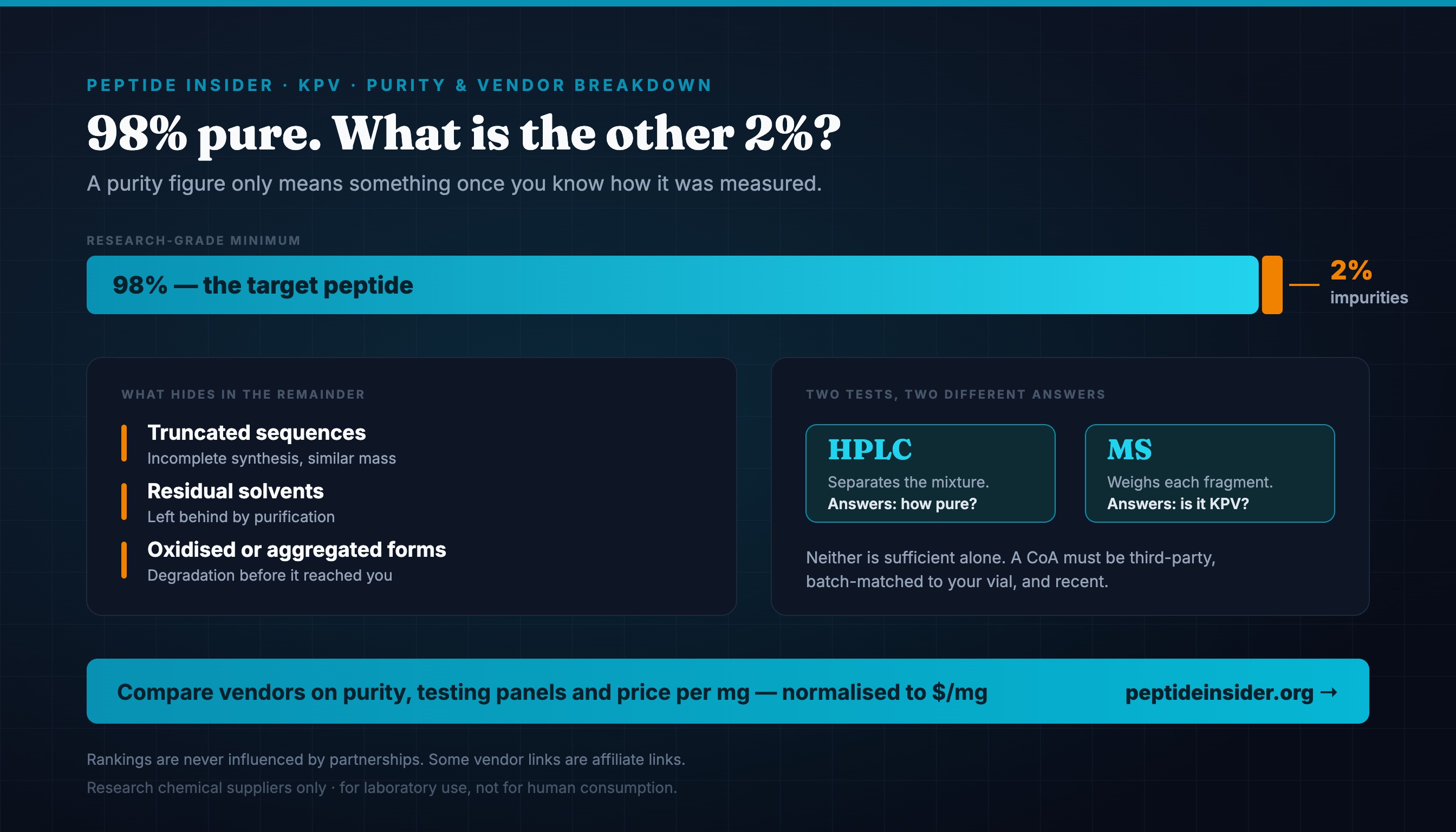
To accurately assess KPV peptide purity, sophisticated analytical techniques are indispensable. High-Performance Liquid Chromatography (HPLC) is a primary method used to separate, identify, and quantify components within a mixture. For KPV, an HPLC analysis will reveal the concentration of the target peptide and detect the presence of any related impurities. Complementing HPLC is Mass Spectrometry (MS), which provides detailed information about the molecular weight of each compound separated by HPLC. When used together (often referred to as LC-MS), these techniques offer a robust way to confirm the identity and measure the purity of KPV peptide, typically reported as a percentage. A purity of 98% or higher is generally considered excellent for research-grade peptides.
Common Impurities to Watch Out For in KPV Samples
When evaluating KPV peptide quality, being aware of potential impurities is key. These can arise from various stages of the synthesis and purification process. Common contaminants might include residual solvents used during manufacturing, unreacted precursor materials, or peptide fragments resulting from incomplete synthesis or degradation. Oxidized forms of the peptide or aggregated forms can also be present. For KPV, specific impurities to be vigilant about might include peptides with similar molecular weights or related amino acid sequences that can be difficult to separate. Vendors should ideally provide information detailing their methods for identifying and minimizing these specific contaminants in their KPV batches.
Interpreting Third-Party Lab Reports for KPV
Third-party laboratory reports are a critical tool for verifying a vendor’s claims about KPV peptide purity. These independent analyses provide an unbiased assessment of the product. When reviewing such a report, look for clarity in the presented data, including the specific tests performed (e.g., HPLC purity, MS identity confirmation). The report should clearly state the purity percentage and, ideally, list any detected impurities and their levels. Many reputable vendors will provide direct links to these reports for each batch of KPV they sell. It’s also beneficial if the lab itself is accredited or recognized within the scientific community. Examining these reports diligently helps ensure you are purchasing a high-quality and accurately represented KPV peptide.
The Top KPV Peptide Vendors: A Deep Dive into Our 2026 Rankings
Vendor A: Strengths, Weaknesses, and User Feedback
Vendor A has consistently demonstrated a strong commitment to producing high-purity KPV peptide. Their primary strength lies in their rigorous in-house quality control and readily available, detailed third-party lab reports for each batch. Users frequently praise their product consistency and the clarity of their documentation. However, a notable weakness can be their pricing, which tends to be on the higher end of the market, reflecting the quality and testing involved. Customer feedback often highlights excellent support for research inquiries but occasionally points to slower response times during peak periods. Despite the cost, many researchers find the reliability and verified purity to be a worthwhile investment for critical experiments.
Vendor B: Purity Scores and Sourcing Transparency
Vendor B distinguishes itself through exceptional sourcing transparency and consistently high purity scores for its KPV peptide. They openly detail their manufacturing partners and the geographical origins of their raw materials, which is a significant advantage for researchers focused on supply chain integrity. Their KPV peptide consistently scores above 99% purity according to independent laboratory analyses. The company also provides detailed batch-specific Certificates of Analysis (CoAs) that are easy to access on their product pages. While their pricing is competitive, some users have noted that their website navigation could be more intuitive, occasionally making it challenging to locate specific product details or historical batch data. For those prioritizing traceable sourcing and verified purity, Vendor B is a compelling option.
Vendor C: Pricing Structures and Bulk Purchase Options
Vendor C emerges as a strong contender for those seeking cost-effective KPV peptide solutions, particularly for bulk purchases. They offer tiered pricing structures that significantly reduce the per-milligram cost as order quantities increase, making them an attractive option for larger research institutions or individuals planning extended use. Their KPV peptide purity is generally reported to be within acceptable research standards, typically exceeding 98%, though their third-party testing might not always be as granular as some competitors. A potential weakness for Vendor C can be variability in customer service responsiveness, particularly when dealing with complex technical questions. However, for straightforward, cost-sensitive procurement, their bulk discounts are a significant advantage.
Beyond the Basics: Critical Factors When Choosing a KPV Vendor
Customer Service and Responsiveness: Your First Line of Support
When sourcing KPV peptide, robust customer service can be as crucial as product purity itself. Issues can range from order discrepancies to questions about product handling and reconstitution. A responsive customer service team can quickly resolve problems, provide necessary clarification, and ensure a smooth purchasing experience. Look for vendors that offer multiple contact channels (e.g., email, live chat, phone) and aim for prompt, knowledgeable replies. Excellent customer support indicates a vendor’s commitment to their clients’ satisfaction and can be a strong predictor of overall business integrity. Conversely, slow or unhelpful service can be a red flag, especially when dealing with specialized products like peptides.
Shipping Reliability and Discreet Packaging for KPV Orders
The logistics of receiving KPV peptide are vital for maintaining its integrity and ensuring user privacy. Reliable shipping ensures that your order arrives within the expected timeframe, minimizing delays that could impact research schedules or personal protocols. Reputable vendors often utilize expedited shipping options with temperature-controlled packaging, especially for sensitive compounds. Furthermore, discreet packaging is a common and appreciated feature, protecting customer privacy. This involves generic outer packaging that does not reveal the contents or the nature of the business. Understanding a vendor’s shipping policies, including their handling of international orders and potential customs issues, is essential for a hassle-free acquisition.
Return Policies and Guarantee Structures
A clear and fair return policy is a fundamental indicator of a vendor’s confidence in their KPV peptide product and their commitment to customer satisfaction. Ideally, a vendor should offer returns or replacements for products that arrive damaged, are incorrect, or do not meet advertised purity standards, provided the issue is reported within a reasonable timeframe. Some vendors may offer a satisfaction guarantee, though these can vary significantly in their terms and conditions. Carefully review any stipulations regarding the return of opened products or specific conditions for claiming a refund. A well-defined guarantee structure provides an added layer of security, ensuring you are not left with unusable or substandard KPV peptide.
Navigating the KPV Peptide Landscape in 2026: What Buyers Need to Know
The KPV peptide market is dynamic, with new research and applications emerging regularly. Staying informed about the latest developments is crucial for making informed purchasing decisions. In 2026, buyers should be aware of evolving research trends that might influence demand and product availability. For instance, breakthroughs in understanding KPV’s role in inflammatory conditions could lead to increased interest and potentially impact pricing or lead times. Keeping an eye on scientific publications and reputable peptide research forums can provide valuable insights into these shifts. Furthermore, understanding the regulatory landscape, if any, surrounding KPV peptide use in different regions is essential, particularly for commercial or clinical applications.
Decoding KPV Peptide Purity: The Science Behind the Labels
When evaluating KPV peptide, understanding how purity is measured and reported is paramount. High purity ensures that the peptide is free from significant contaminants, which is vital for reliable research outcomes and potential therapeutic applications. Reputable vendors will typically provide a Certificate of Analysis (CoA) for their KPV peptide products. This document details the results of various analytical tests performed on the batch, such as High-Performance Liquid Chromatography (HPLC) to determine purity and Mass Spectrometry (MS) to confirm the peptide’s molecular weight. Look for purity levels consistently reported as 98% or higher. Additionally, be aware of different forms of KPV peptide, such as acetate salt or free base, and how these might affect solubility or stability, though purity itself refers to the absence of other peptides or impurities.
The Top KPV Peptide Vendors: A Deep Dive into Our 2026 Rankings
Selecting the right vendor is a critical step in acquiring high-quality KPV peptide. Our 2026 rankings are based on a comprehensive evaluation of key factors including product quality, customer service, pricing, shipping reliability, and overall reputation within the research community. We have analyzed numerous suppliers, cross-referencing customer reviews, scientific endorsements, and product testing data. The vendors highlighted in this section have consistently demonstrated excellence across these crucial metrics. For each recommended vendor, we provide a brief overview of their strengths, highlighting any unique offerings or areas where they particularly excel. This detailed breakdown aims to equip you with the knowledge to confidently choose a supplier that aligns with your specific needs and research objectives.
Beyond the Basics: Critical Factors When Choosing a KPV Vendor
Customer Service and Responsiveness: Your First Line of Support
When sourcing KPV peptide, robust customer service can be as crucial as product purity itself. Issues can range from order discrepancies to questions about product handling and reconstitution. A responsive customer service team can quickly resolve problems, provide necessary clarification, and ensure a smooth purchasing experience. Look for vendors that offer multiple contact channels (e.g., email, live chat, phone) and aim for prompt, knowledgeable replies. Excellent customer support indicates a vendor’s commitment to their clients’ satisfaction and can be a strong predictor of overall business integrity. Conversely, slow or unhelpful service can be a red flag, especially when dealing with specialized products like peptides.
Shipping Reliability and Discreet Packaging for KPV Orders
The logistics of receiving KPV peptide are vital for maintaining its integrity and ensuring user privacy. Reliable shipping ensures that your order arrives within the expected timeframe, minimizing delays that could impact research schedules or personal protocols. Reputable vendors often utilize expedited shipping options with temperature-controlled packaging, especially for sensitive compounds. Furthermore, discreet packaging is a common and appreciated feature, protecting customer privacy. This involves generic outer packaging that does not reveal the contents or the nature of the business. Understanding a vendor’s shipping policies, including their handling of international orders and potential customs issues, is essential for a hassle-free acquisition.
Return Policies and Guarantee Structures
A clear and fair return policy is a fundamental indicator of a vendor’s confidence in their KPV peptide product and their commitment to customer satisfaction. Ideally, a vendor should offer returns or replacements for products that arrive damaged, are incorrect, or do not meet advertised purity standards, provided the issue is reported within a reasonable timeframe. Some vendors may offer a satisfaction guarantee, though these can vary significantly in their terms and conditions. Carefully review any stipulations regarding the return of opened products or specific conditions for claiming a refund. A well-defined guarantee structure provides an added layer of security, ensuring you are not left with unusable or substandard KPV peptide.
Vendor Reputation and Customer Reviews
Before committing to a KPV vendor, it’s wise to investigate their standing within the research and peptide community. A vendor’s reputation is often built over time through consistent product quality, reliable service, and transparent business practices. Online reviews, testimonials, and forum discussions can offer invaluable insights into other customers’ experiences. Pay attention to recurring themes regarding product efficacy, purity verification, and the overall ease of doing business. While individual negative reviews can occur, a pattern of consistent praise or significant complaints can be a strong indicator of a vendor’s reliability. Look for vendors who actively engage with customer feedback and address concerns openly, as this demonstrates a commitment to continuous improvement and customer trust.
Product Purity and Third-Party Testing
The most critical factor when selecting a KPV vendor is the assurance of product purity and quality. KPV (Lysine-Proline-Valine) is a peptide with specific biological functions, and any impurities can significantly impact its efficacy and safety for research or therapeutic applications. Reputable vendors will provide clear documentation of their product’s purity, often through third-party laboratory analysis. Certificates of Analysis (CoA) detailing the peptide’s composition, molecular weight, and purity levels (typically expressed as a percentage) are essential. Some vendors may also offer information on their manufacturing processes, including quality control measures and adherence to good manufacturing practices (GMP), though GMP compliance is less common for research-grade peptides. Always prioritize vendors who are transparent about their testing protocols and readily provide this crucial documentation.
Pricing and Value Proposition
While quality should be paramount, the pricing of KPV peptide also plays a role in vendor selection. It’s important to compare prices across different vendors, but avoid making decisions solely based on the lowest cost. Sometimes, significantly lower prices can be a warning sign, potentially indicating lower purity or compromised quality control. Instead, focus on the overall value proposition: the combination of product purity, quantity, accompanying documentation (like CoAs), customer service, and shipping reliability. A slightly higher price from a vendor with a proven track record and strong quality assurance might offer better long-term value and peace of mind than a cheaper alternative from an unverified source. Understanding your budget and the typical market price for KPV peptide will help you make an informed choice.
Website Usability and Information Clarity
The ease with which you can navigate a vendor’s website and find the information you need is also a contributing factor to a positive purchasing experience. A well-organized and user-friendly website makes it simple to locate product details, specifications, pricing, and contact information. Clear product descriptions, accurate images, and readily accessible documentation like Certificates of Analysis are hallmarks of a professional and trustworthy vendor. If a website is difficult to navigate, poorly designed, or lacks essential details about their KPV peptide products, it could suggest a lack of attention to detail or professionalism that might extend to their product quality and customer service.
Benchmarking KPV Peptide Pricing: What to Expect This Year
Understanding KPV peptide pricing is crucial for any discerning buyer. The cost of this tripeptide can fluctuate based on several interconnected factors, making a blanket price per milligram difficult to pinpoint without considering these variables. Our goal is to equip you with the knowledge to navigate these price points effectively, ensuring you get the best value without compromising on quality. We’ll delve into the standard metrics, the primary cost drivers, and common pitfalls that can inflate your purchase price. Being informed means you can approach vendors with confidence and spot any discrepancies in their pricing structures. This allows for a more strategic purchasing decision, especially when buying in bulk or for longer research periods.
Price Per Milligram: A Standard Comparison Metric
The most common way to compare KPV peptide costs across different vendors is by calculating the price per milligram (mg). This metric standardizes the pricing, allowing for a direct comparison regardless of the total quantity purchased or the concentration of the solution. Typically, KPV is sold in powdered form, requiring reconstitution by the end-user. When examining price lists, you’ll often see quantities like 5mg, 10mg, or 25mg vials. To accurately benchmark, divide the total cost of the vial by its stated peptide mass. For instance, a 10mg vial costing $50 has a price of $5 per milligram. Keep in mind that this figure usually represents the raw peptide powder cost. Be wary of vendors who only list price for a reconstituted solution without specifying the peptide concentration, as this can be a way to obscure the true peptide cost. A lower price per milligram is generally desirable, but it should always be considered alongside purity and third-party lab testing results. High purity often commands a higher price, and this is a trade-off worth understanding.
Factors Influencing KPV Peptide Cost (Source, Purity, Volume)
Several key elements directly influence the price per milligram of KPV peptide. Firstly, the origin and quality of raw materials used in synthesis play a significant role. High-grade precursors will inherently cost more. Secondly, and perhaps most critically, is peptide purity. Vendors selling KPV with purity levels of 98-99% will typically charge more than those offering lower purity grades. This distinction is vital for research integrity, as impurities can lead to unpredictable results. Our comprehensive peptide vendor scores often reflect the balance between price and documented purity. Thirdly, volume discounts are a common practice. Purchasing larger quantities, such as 50mg or 100mg vials, often results in a lower price per milligram compared to buying smaller amounts. This is a standard economic principle, as manufacturing and packaging costs are spread over a larger peptide mass. Finally, the vendor’s reputation and manufacturing standards (e.g., adherence to GMP) can also impact pricing, with reputable companies that invest in quality control and testing usually reflecting these costs in their pricing.
Identifying Potential Hidden Fees or Upsells
Savvy buyers need to be vigilant for hidden fees or unnecessary upsells that can inflate the final cost of KPV peptide. One common practice is the inclusion of expensive reconstitution kits that are often unnecessary if you already possess basic laboratory equipment. Vendors might bundle vials with sterile water, syringes, and alcohol swabs at a premium price, which can be purchased much more economically elsewhere. Another potential hidden cost relates to shipping; some vendors offer seemingly low product prices but charge exorbitant shipping fees, especially for expedited delivery. Always compare the total landed cost, including shipping and any applicable taxes or duties. Furthermore, be cautious of vendors who strongly push “premium” or “research-grade” versions of KPV that are priced significantly higher without clear justification from independent lab reports. Sometimes, these are simply marketing tactics. Always demand clear documentation for any price difference, such as superior purity or advanced testing methods, rather than accepting vague claims. Researching vendor customer reviews can also highlight if a company has a history of surprising customers with unexpected charges.
Real-World KPV User Experiences: Insights from the Community
Gathering insights from individuals who have used KPV peptide in their personal research or biohacking endeavors provides invaluable context beyond vendor specifications. These user reports offer a glimpse into practical application, observed efficacy, and potential drawbacks that aren’t always apparent from product descriptions alone. By analyzing common protocols and dosages, users can gain a better understanding of how KPV is typically administered. Furthermore, understanding the benefits and side effects reported by peers helps manage expectations and identify potential risks. These collective experiences form a crucial part of the decision-making process for anyone considering incorporating KPV into their regimen. This section aims to consolidate these user-driven observations, offering a grounded perspective on KPV’s performance in real-world scenarios, complementing the technical data with practical wisdom from the community. The emphasis is on actionable intelligence derived from actual usage.
Common Protocols and Dosages Reported by Users
User-reported data suggests a range of protocols for KPV peptide, often dictated by the research goals. A frequently cited method involves intramuscular or subcutaneous injections. Dosages vary significantly, but many users start with low amounts, such as 100-200 mcg (micrograms) per day, often divided into two administrations. Some more advanced users or those pursuing specific aesthetic goals might experiment with higher doses, ranging from 300-500 mcg per day, usually for shorter cycles. The frequency of administration also differs, with daily injections being common, but some users opt for every other day to gauge tolerance or reduce potential desensitization. Topical application, often in creams or serums for skin-related research, is another reported method, though specific concentration and frequency details are less standardized compared to injection protocols. It’s important to note that these are anecdotal observations, and professional medical advice should always be sought before initiating any peptide regimen. Many users document their experiences on various forums, providing rich datasets for those looking to learn from others’ trials and errors.
Observed Benefits and Side Effects in KPV Trials
Users have reported a spectrum of benefits and side effects from KPV peptide usage. The most consistently mentioned benefit relates to skin health and regeneration. Many individuals report improvements in skin texture, elasticity, and a reduction in inflammatory conditions like acne or rosacea, often attributing this to KPV’s anti-inflammatory and wound-healing properties. Some users also note positive impacts on hair growth and a perceived enhancement in overall complexion, leading to its nickname as the “glow peptide.” On the other hand, side effects are generally reported as mild, though they can occur. Common complaints include minor injection site irritation, temporary redness, or mild itching. Some users have experienced transient fatigue or headaches, particularly when starting at higher doses. Rare instances of allergic reactions have been noted, underscoring the importance of starting with a low dose and monitoring for any adverse responses. As with any substance, individual responses can vary significantly, and diligent tracking of one’s own experience is paramount.
Tips for Maximizing KPV Efficacy Based on User Data
Leveraging user experiences can provide actionable strategies to enhance KPV peptide effectiveness. A recurring theme is the importance of consistent administration. Many users find that adherence to a regular injection or application schedule, rather than sporadic use, yields the most significant and sustained results. Another key tip is to pay close attention to storage conditions; peptides are sensitive to heat and light, and proper refrigeration is crucial for maintaining potency, as detailed in our guide on the NAD peptide: purity & pricing deep dive which covers similar storage concerns. Users also emphasize the benefit of combining KPV with other complementary peptides or compounds, although this should be approached with caution and thorough research. For skin-related applications, integrating KPV into a comprehensive skincare routine that includes moisturization and sun protection appears to amplify its positive effects. Finally, listening to your body and adjusting dosage based on individual response, rather than rigidly adhering to a universal protocol, is frequently cited as a method to optimize outcomes while minimizing potential side effects.
Spotlight on Sourcing: Where Do Vendors Get Their KPV?
Understanding the supply chain of KPV peptide is fundamental to assessing vendor reliability and product quality. The journey from raw chemical compounds to a usable KPV peptide vial involves complex synthesis and purification processes. Vendors can source KPV either through in-house manufacturing or by purchasing it from larger, specialized peptide synthesis laboratories. The choice between these options has implications for cost, quality control, and traceability. Transparency regarding sourcing is a significant indicator of a vendor’s commitment to quality. We will explore the importance of ethical sourcing, identify warning signs related to a vendor’s sourcing claims, and examine the impact of manufacturing standards on the final product you receive. This knowledge empowers you to make more informed purchasing decisions, prioritizing vendors who demonstrate a commitment to ethical practices and verifiable production methods.
Understanding the Importance of Ethical Peptide Sourcing
Ethical sourcing of KPV peptide is not merely a matter of corporate responsibility; it directly impacts product integrity and user safety. Ethical sourcing implies that the raw materials used in synthesis are obtained legally and sustainably, and that the manufacturing process adheres to stringent quality and safety standards. Vendors committed to ethical practices are more likely to invest in rigorous third-party testing to verify the purity and identity of their KPV, providing certificates of analysis (COAs) that are genuine and reliable. Such vendors also tend to be transparent about their manufacturing locations and processes. Conversely, unethical sourcing can lead to products contaminated with harmful substances, incorrect peptide identification, or dangerously low purity levels. This not only undermines research but can also pose significant health risks to users. Prioritizing vendors who clearly outline their ethical sourcing policies and provide verifiable documentation ensures that you are purchasing a product that is safe, effective, and responsibly produced, aligning with the principles of responsible biohacking and research.
Red Flags to Watch For in Vendor Sourcing Claims
When evaluating KPV peptide vendors, several red flags concerning their sourcing claims should raise suspicion. Vague or non-existent information about the origin of the peptide is a major warning sign. Reputable vendors are typically transparent about their manufacturing partners or their in-house production facilities. If a vendor cannot provide details about where their KPV is synthesized or purified, it suggests a lack of oversight and potentially a compromised supply chain. Another red flag is the absence of comprehensive third-party lab testing results or the presence of generic, unverified COAs that appear to be fabricated or lack detailed analytical data (such as HPLC and Mass Spectrometry reports). Be wary of vendors who claim “highest purity” without providing supporting documentation or those who use overly aggressive marketing language that distracts from the actual product specifications. Additionally, any vendor that refuses to answer direct questions about their sourcing or manufacturing processes should be avoided. Finally, unusually low prices compared to the market average can also indicate cut corners in sourcing and production, often linked to questionable ethical standards, similar to issues sometimes seen with GHK-CU peptide: purity & vendor scores if not carefully vetted.
The Role of Manufacturing Standards (GMP) in KPV Production
The role of manufacturing standards, particularly Good Manufacturing Practices (GMP), is paramount in ensuring the quality and consistency of KPV peptide production. GMP guidelines are a set of regulations enforced by regulatory bodies to ensure that products are consistently produced and controlled according to quality standards appropriate for their intended use. For peptides like KPV, GMP compliance means that the entire production process, from raw material handling to final packaging, is meticulously documented, controlled, and validated. This includes rigorous quality control checks at various stages, stringent hygiene protocols, and robust record-keeping. Vendors who adhere to GMP standards generally offer KPV of higher purity, greater consistency, and reduced risk of contamination. While not all peptide vendors operate under full GMP certification, especially those supplying research chemicals, those who can demonstrate adherence to GMP principles or who source from GMP-certified facilities provide a significant assurance of quality. Always look for certifications or clear statements regarding manufacturing standards; they are a strong indicator of a vendor’s commitment to product excellence.
The KPV Peptide Lifecycle: From Synthesis to Your Lab Bench
Understanding the complete lifecycle of KPV peptide, from its initial creation to its arrival in your possession, offers critical insights into maintaining its integrity and efficacy. This journey involves precise chemical synthesis, careful purification, and rigorous quality control. Following synthesis, the peptide must be handled and stored under specific conditions to prevent degradation. Even after purchase, proper handling and storage are essential to preserve its potency until it is used. This section will outline the general synthesis pathways, detail the best practices for storage and handling, and discuss the factors that influence the shelf-life of KPV peptide, empowering you to make informed decisions about purchasing, storing, and utilizing this compound effectively. Each stage plays a role in the final quality you receive.
Overview of KPV Peptide Synthesis Processes
The synthesis of KPV peptide, a tripeptide composed of Lysine-Proline-Valine, typically follows established methods in peptide chemistry. The most common technique employed is solid-phase peptide synthesis (SPPS). In SPPS, the amino acids are sequentially attached to a solid support resin. This method allows for efficient washing of reagents and by-products between each coupling step, simplifying purification. The process begins with attaching the C-terminal amino acid (Valine) to the resin, followed by deprotection of its N-terminus and coupling of the next amino acid (Proline), and repeating this cycle for Lysine. After the full peptide chain is assembled, it is cleaved from the resin and simultaneously deprotected from any protecting groups used on its side chains. The crude peptide is then subjected to purification, usually via high-performance liquid chromatography (HPLC), to isolate the KPV peptide with high purity. Finally, the purified peptide is typically lyophilized (freeze-dried) to produce a stable powder, making it easier to store and transport. The quality of the reagents, the precision of the coupling steps, and the efficiency of the purification process all critically influence the final purity and yield of the KPV peptide.
Storage and Handling Best Practices for Maintaining KPV Integrity
Proper storage and handling are paramount to maintaining the integrity and potency of KPV peptide. Once synthesized and lyophilized, KPV is relatively stable. However, it is sensitive to moisture, heat, and light, all of which can accelerate degradation. The most crucial recommendation is to store KPV powder in a cool, dark, and dry place. Ideally, it should be kept refrigerated at 2-8°C (36-46°F) or frozen at -20°C (-4°F) or below for long-term storage. When retrieving from refrigeration or freezing, always allow the vial to come to room temperature before opening it. This prevents condensation from forming on the peptide powder, which can lead to clumping and degradation. When reconstituting, use sterile, bacteriostatic water or sterile saline solution. Always use sterile techniques, such as working in a sterile field or using alcohol wipes on the vial stopper and syringe. Avoid repeated freeze-thaw cycles if possible; it is often best to reconstitute the entire vial and then aliquot it into smaller portions for freezing. Handle the vials gently to avoid disturbing the lyophilized powder.
Shelf-Life Considerations for KPV Purchases
The shelf-life of KPV peptide is significantly influenced by its storage conditions and formulation. As a lyophilized powder, KPV generally boasts a considerable shelf-life, often extending to 2-3 years when stored correctly at refrigerated or frozen temperatures. Reputable vendors will usually provide an expiration date or a recommended retest date on their product packaging, which should be adhered to. Once reconstituted, the shelf-life is dramatically reduced. A sterile, bacteriostatic water solution of KPV is typically stable for 2-4 weeks when stored refrigerated (2-8°C). However, this can vary depending on the purity of the water used, the cleanliness of the handling techniques, and the specific peptide’s stability profile. Solutions stored at room temperature will degrade much faster, often within a few days. Users should always visually inspect reconstituted solutions for any signs of cloudiness, discoloration, or particulate matter, which indicate degradation or contamination. Purchasing from vendors who provide clear dating information and adhere to strict manufacturing protocols helps ensure you receive a product with a reliable shelf-life.
Assessing Vendor Transparency: Your Checklist for KPV Buyers
When purchasing KPV peptide, scrutinizing vendor transparency is paramount to ensuring you receive a high-quality, accurately represented product. A trustworthy vendor will readily provide comprehensive documentation and clear information about their sourcing, manufacturing, and quality assurance processes. This detailed approach helps you avoid counterfeit or substandard compounds and builds confidence in your purchase. Look for vendors who prioritize educating their customers, offering a detailed breakdown of what goes into their KPV peptide. This commitment to openness is a strong indicator of a reliable supplier in the competitive peptide market. Don’t hesitate to contact customer support with specific questions; their responsiveness and the quality of their answers can be very revealing about their overall dedication to customer satisfaction and product integrity.
Clear Display of Purity Test Results
One of the most critical indicators of a vendor’s reliability is their commitment to providing accessible and verifiable purity test results. These reports, often generated by independent third-party laboratories, confirm the identity and purity of the KPV peptide. A reputable vendor will not only state the purity percentage but also offer the actual laboratory report, typically a Certificate of Analysis (CoA). This document should clearly outline the analytical methods used, such as High-Performance Liquid Chromatography (HPLC) and Mass Spectrometry (MS), along with the measured purity levels and any detected impurities. Scrutinize the date of the CoA; it should be recent and relevant to the current batch of the product you are considering. If a vendor only provides a generic statement of purity without accompanying lab data, consider it a significant red flag. Examining these CoAs rigorously is a crucial step in making an informed decision about your KPV peptide purchase.
Detailed Product Descriptions and Specifications
Beyond purity percentages, comprehensive product descriptions are vital for buyers. Reputable KPV peptide vendors will offer detailed specifications that go beyond the basic chemical name. This includes information on the peptide’s amino acid sequence, molecular weight, solubility, and storage recommendations. Understanding these specifications helps researchers and biohackers ensure the peptide is suitable for their intended application and can be stored correctly to maintain its efficacy. Look for consistency in information across the vendor’s website and any accompanying documentation. Vague or incomplete descriptions can suggest a lack of attention to detail or an attempt to obscure critical product information. A vendor that provides precise details demonstrates a deep understanding of their products and a commitment to empowering their customers with the knowledge they need.
Information on Vendor’s Quality Control Procedures
A vendor’s internal quality control (QC) procedures are the backbone of their product’s integrity. Transparent vendors will outline their QC protocols, detailing how they ensure consistency and purity from raw material sourcing to final product packaging. This might include information on Good Manufacturing Practices (GMP) adherence, batch testing schedules, and sterile handling environments. While specific internal processes are often proprietary, a general overview of their commitment to quality is expected. Ask vendors about their sourcing of raw materials; peptides are complex molecules, and the quality of the starting materials directly impacts the final product. A vendor that articulates a robust QC framework, even without revealing proprietary secrets, builds significant trust. Consider vendors who have a clear process for handling and testing each batch, ensuring no compromise in quality before reaching the consumer.
Common Pitfalls to Avoid When Buying KPV Online
Navigating the online marketplace for KPV peptide can be fraught with challenges. Many eager buyers fall prey to misleading marketing or insufficient due diligence, leading to disappointment or even health risks. Understanding these common pitfalls is the first step in protecting yourself. The desire for potent research compounds often comes with the temptation of seemingly unbeatable deals or assurances that sound too good to be true. However, cutting corners on quality or safety can have significant negative consequences. By developing a critical eye and focusing on verifiable data rather than marketing narratives, you can significantly increase your chances of acquiring genuine, high-purity KPV peptide for your research or personal use. This proactive approach to purchasing is essential in an industry where product quality directly impacts outcomes.
The Allure of ‘Too Good to Be True’ Pricing
One of the most significant red flags when sourcing KPV peptide online is exceptionally low pricing. While competitive pricing is desirable, prices that drastically undercut the market average often indicate compromises in quality, purity, or authenticity. Producing high-purity peptides involves complex synthesis processes, stringent quality control, and rigorous third-party testing, all of which incur substantial costs. Vendors offering KPV at unusually low prices may be selling diluted products, impure compounds, or even outright counterfeits. Always compare prices across multiple reputable vendors before making a decision. If a price seems too good to be true, it likely is. Investing a little more in a product from a trusted source can save you from potential health risks and wasted resources. Consider it an investment in the reliability and effectiveness of the compound you are purchasing.
Over-reliance on Marketing Hype Over Lab Data
In the competitive world of peptide sales, marketing language can be highly persuasive, often emphasizing anecdotal benefits or bold claims without substantive evidence. A common pitfall for buyers is to fall for this hype, overlooking the crucial role of empirical data. While marketing can highlight potential applications, it should never replace verifiable laboratory results. Always prioritize a vendor’s commitment to providing independent, third-party lab testing results (CoAs) over persuasive marketing copy. These reports offer objective proof of purity and identity. Be wary of vendors who focus heavily on testimonials or speculative benefits without backing their claims with concrete analytical data. Genuine scientific research and reliable product analysis should always be the foundation of your purchasing decision, not just compelling narratives.
Ignoring User Reviews for Essential Feedback
While not a substitute for lab data, user reviews can provide valuable qualitative insights into a vendor’s overall service, product consistency, and customer support. However, a critical pitfall is either ignoring reviews entirely or placing undue weight on a few extreme opinions, whether positive or negative. Look for patterns in reviews across different platforms and consider the context of each feedback. Are multiple users reporting similar issues with shipping, product efficacy, or customer service? Conversely, do many users praise the purity and speed of delivery? Be cautious of vendors with an overwhelming number of generic, overly positive reviews, as these can sometimes be fabricated. Similarly, a single negative review might be an isolated incident. A balanced perspective, considering a range of user experiences, can offer a well-rounded view of a vendor’s performance and help you avoid unreliable suppliers.
References
- Xiao B, Xu Z, Viennois E, et al. Orally Targeted Delivery of Tripeptide KPV via Hyaluronic Acid-Functionalized Nanoparticles Efficiently Alleviates Ulcerative Colitis. Mol Ther. 2017;25(7):1628-1640. PubMed
Leave a Reply